
Choosing an RFID manufacturer is not simply a matter of comparing product prices, reading specifications, or selecting a supplier with an attractive website.
RFID tags and labels are engineered products. Their performance depends on multiple factors, including chip selection, antenna design, material construction, manufacturing processes, encoding requirements, and the environment in which they will be used.
Two suppliers may offer products with similar dimensions and chip models but deliver different results in actual applications. Likewise, a company that describes itself as an RFID manufacturer may perform very different production activities from another company using the same description.
For procurement managers, distributors, label converters, and RFID system integrators, the challenge is to determine whether a supplier can consistently provide products that meet the agreed technical and commercial requirements.
This guide presents a practical framework for evaluating an RFID manufacturer based on verifiable capabilities rather than marketing claims.
1. Understand What Type of RFID Supplier You Are Evaluating
Before assessing a supplier’s production capability, clarify its actual role in the supply chain.
Not every company selling RFID products operates the same manufacturing processes.
| Supplier type | Typical activities | What buyers should clarify |
|---|---|---|
| RFID manufacturer | Produces RFID components, tags, labels, or finished products | Which manufacturing processes are operated or controlled by the company? |
| RFID converter | Converts inlays into finished labels, tickets, or other formats | Which printing, lamination, die-cutting, and finishing processes are available? |
| RFID distributor | Sources and resells products from manufacturers | Who makes the products, and who handles quality issues? |
| RFID solution provider | Combines RFID hardware, software, and implementation services | Which hardware is supplied directly, and which services are provided by partners? |
| RFID system integrator | Designs and integrates RFID systems for specific applications | Who is responsible for tag selection, system testing, and hardware supply? |
These categories are not mutually exclusive. A supplier may manufacture certain products, convert others, and distribute additional products from external sources.
The important question is not simply whether a company is a manufacturer. It is whether its actual role matches the requirements of your project.
Questions to ask:
- Which RFID products do you manufacture or customize?
- Which production processes are performed within your manufacturing operation?
- Are any processes outsourced or handled by manufacturing partners?
- Who is responsible for product inspection and final release?
- Who handles technical issues if a product does not meet the agreed specifications?
A clear answer is more useful than a broad claim of being a full-service manufacturer.
2. Evaluate Product and Engineering Capability
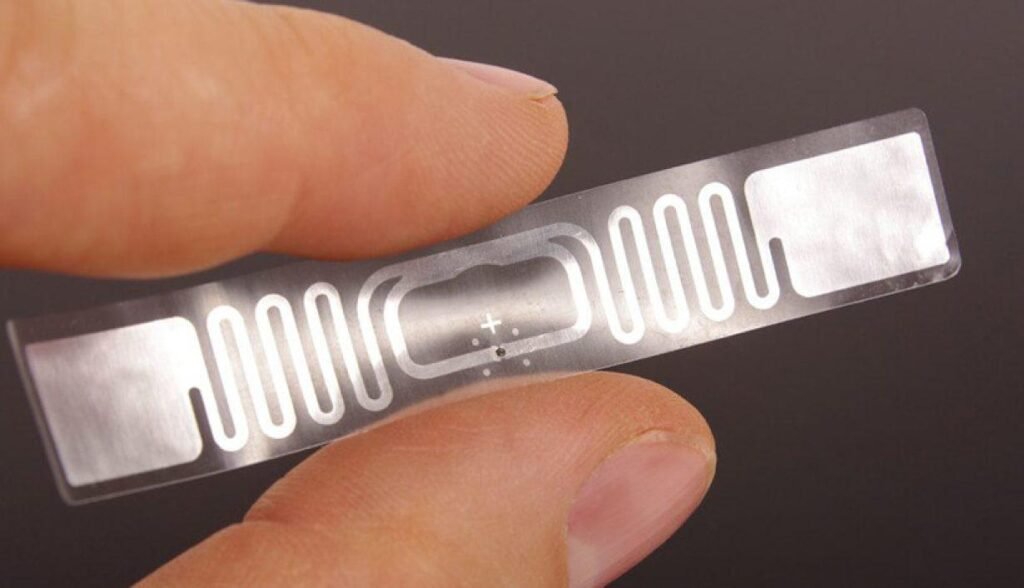
An RFID manufacturer should be able to understand the technical requirements of the products it supplies.
This is especially important when sourcing customized RFID tags, anti-metal tags, laundry tags, or products designed for demanding operating environments.
Chip selection
The RFID chip affects characteristics such as memory organization, protocol support, sensitivity, and available functions.
A supplier should be able to discuss the chip options relevant to the intended application and explain any limitations.
However, buyers should not assume that a more expensive chip or a chip with more memory automatically produces a better RFID tag.
Antenna design
The antenna affects how effectively the complete tag receives energy and communicates with the reader.
Relevant design considerations include:
- Antenna dimensions and geometry.
- Chip-to-antenna impedance matching.
- Substrate and conductive materials.
- Operating frequency.
- Tag orientation and polarization.
- Mounting surface and installation environment.
A supplier should understand the relationship between the chip, antenna, and finished tag rather than evaluating these components independently.
Product construction and materials
Different applications require different tag constructions.
| Application | Potential product considerations |
|---|---|
| General inventory | Label dimensions, adhesive, printing, and encoding |
| Metal assets | Anti-metal structure, spacing, mounting, and antenna design |
| Industrial equipment | Housing, mechanical protection, and environmental exposure |
| Industrial laundry | Textile integration, repeated washing, heat, pressure, and chemicals |
| Apparel and retail | Hang-tag format, adhesive labels, encoding, and barcode printing |
| Jewelry | Small dimensions, attachment method, and metal-related RF effects |
A supplier does not need to offer every possible construction. What matters is whether it can identify suitable options and explain the technical limitations.
What buyers should request: Product specifications, relevant technical datasheets, construction details, and samples representative of the intended application.
3. Understand the Actual Manufacturing Scope

Manufacturing capability should be evaluated by process, not by the appearance of a factory or the number of machines shown in a company presentation.
For RFID products, relevant manufacturing activities may include:
- Material and component preparation.
- RFID chip and antenna assembly.
- Inlay production or sourcing.
- Lamination and product encapsulation.
- Label converting and finishing.
- Printing and encoding, where applicable.
- Functional inspection and product packaging.
Not every supplier performs all these activities. Some specialize in selected production stages, while others coordinate several processes through an integrated manufacturing arrangement.
For buyers, the objective is to understand which processes the supplier performs, which it controls through partners, and which are outside its scope.
Questions worth asking
- Which production stages are performed directly?
- Which components are sourced from external suppliers?
- How are material or component substitutions controlled?
- How are changes to product specifications approved?
- Can the supplier explain the manufacturing flow for the specific product being quoted?
A process description is particularly useful when evaluating customized products. It helps establish whether the supplier understands the product beyond its sales specifications.
RFID Tags for Inventory Tracking: How It Works, Benefits and Trends
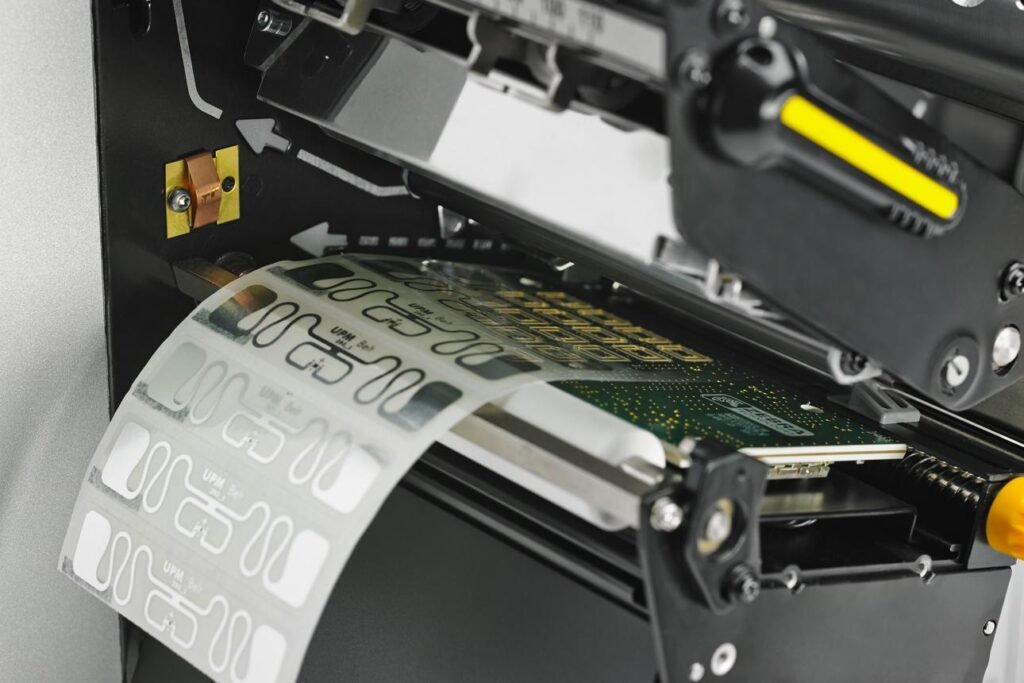
beontag.comVisual recommendation: RFID manufacturing and converting processes. Use an actual, verified supplier production photograph where possible; a stock or conceptual image must not be presented as a particular factory’s equipment.
4. Evaluate Quality Control and Testing
Quality control is one of the most important parts of RFID supplier evaluation.
A tag may look acceptable but still have functional problems. Visual inspection alone cannot confirm chip operation, electrical connection quality, encoding accuracy, or radio-frequency performance.
A useful supplier evaluation should consider several categories of inspection.
| Quality area | What may be checked | What buyers should ask |
|---|---|---|
| Incoming materials | Material specifications, dimensions, component condition | How are incoming materials verified? |
| Chip and antenna assembly | Attachment quality and electrical connection | How are assembly problems detected? |
| RFID functionality | Whether the tag responds to a compatible reader | Which products receive functional checks? |
| RF performance | Sensitivity or performance under defined test conditions | What equipment and test conditions are used? |
| Encoding | EPC or other required data | How are data accuracy and uniqueness verified? |
| Physical inspection | Dimensions, appearance, printing, and finishing | Which characteristics are inspected? |
| Adhesive and materials | Adhesion or material properties where applicable | Which tests are relevant to the product? |
| Environmental durability | Heat, humidity, washing, chemicals, or mechanical stress | Are tests available for the intended application? |
The RAIN Alliance Manufacturing Quality Guideline provides a useful industry reference for defining measurable RFID quality characteristics, including RF performance, data retention, documentation, performance variation, mechanical durability, and environmental resistance. The RAIN Alliance+1
However, buyers should distinguish between three different things:
- A test that a supplier recommends.
- A test that a supplier has the equipment and capability to perform.
- A test that the supplier actually performs on the specific product or production lot.
These are not interchangeable.
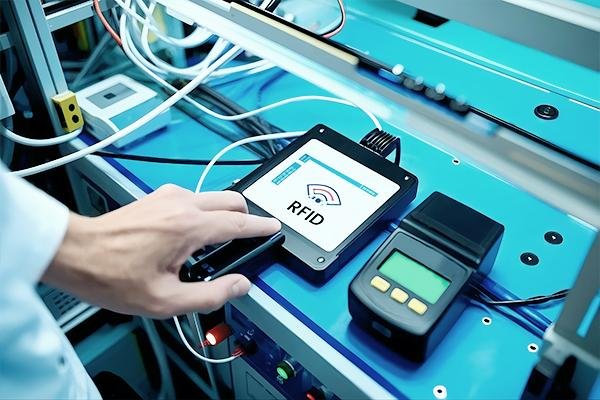
Functional testing is not the same as RF performance testing
A basic reader test may establish that a tag responds under a particular setup.
It does not necessarily establish that the tag meets a defined sensitivity range or performs consistently across different orientations, frequencies, or application conditions.
For a more meaningful comparison, buyers should request the test method, equipment configuration, frequency range, reader power, antenna arrangement, tag orientation, and acceptance criteria.
GS1’s Tagged-Item Performance Protocol provides a structured example of repeatable performance evaluation under defined test conditions. ref.gs1.org
5. Check Customization and Application Suitability
A supplier may offer many standard RFID products but still have limited capability to adapt them to a specific application.
Customization can involve:
- Tag dimensions and shape.
- Chip selection.
- Antenna configuration.
- Substrate and housing materials.
- Adhesive type.
- Printing and barcode requirements.
- Encoding data format.
- Mounting or installation method.
For example, an ordinary UHF label may not be suitable for direct installation on a metal surface. A laundry tag may require a construction that can withstand repeated exposure to washing conditions. A jewelry tag may need a compact format and a carefully selected attachment method.
The supplier should ask questions about the actual application before recommending a product.
A useful test of technical capability: Does the supplier ask about the mounting surface, operating environment, required dimensions, reader setup, and performance expectations before proposing a tag?
If a supplier recommends exactly the same product regardless of application conditions, buyers should investigate further.
6. Evaluate Production Consistency and Traceability
A successful sample is important, but it does not guarantee that every future production lot will perform identically.
Production consistency is especially important for customers who place repeat orders or deploy RFID tags across multiple facilities.
Potential sources of variation include:
- Component or material changes.
- Chip attachment differences.
- Antenna production variation.
- Lamination and finishing differences.
- Changes in product dimensions.
- Encoding errors.
- Process adjustments.
A supplier evaluation should therefore include questions about how product specifications are controlled and how production lots are identified.
What should buyers look for?
| Evaluation area | Evidence to request |
|---|---|
| Product specification control | Approved product drawings or specifications |
| Material control | Material identification and change records, where available |
| Production lot identification | Lot or order reference information |
| Inspection records | Records linked to the relevant production lot |
| Nonconformance handling | Explanation of how rejected products are identified and managed |
| Product changes | Change notification and approval procedures |
| Repeat-order consistency | Comparison of results from different production lots |
Not every supplier will have the same traceability system. The appropriate level depends on the product, order size, application risk, and customer requirements.
The key is to establish what information is available and whether it is sufficient for the buyer’s quality requirements.
7. Evaluate Samples Before Placing a Large Order
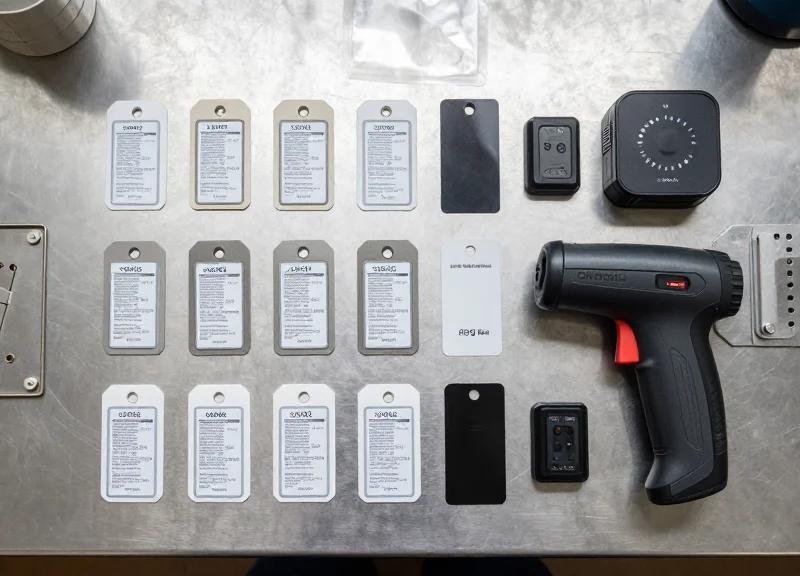
Samples are one of the most practical ways to evaluate a potential RFID supplier.
However, a sample should be tested under conditions that resemble the intended application.
A tag that reads successfully on a desk may perform differently when attached to metal, placed on a liquid container, folded into textiles, or installed among many other tagged objects.
Recommended sample evaluation process
Passive UHF RFID Tags Explained: How They Work and How to Choose the Right One
cykeorfid.comVisual recommendation: Sample testing with an RFID reader. The final image should show a real evaluation setup or be clearly identified as an illustrative demonstration.
Step 1 — Confirm the sample specification
Check the chip, dimensions, antenna or product format, material, adhesive, and other agreed requirements.
Step 2 — Test basic functionality
Confirm that the tags respond to a compatible reader and that the expected data can be retrieved.
Step 3 — Verify encoding
Check whether the required EPC, identifier, or other data has been correctly encoded.
Step 4 — Evaluate RF performance
Use a repeatable test setup. Keep the reader, antenna, power, frequency, orientation, distance, and test environment consistent when comparing samples.
Step 5 — Test the actual application
Attach tags to representative objects and test them under realistic conditions.
Step 6 — Record the results
Document the sample identification, test setup, results, observed problems, and agreed acceptance criteria.
A sample test is not a production qualification
A small number of successful samples cannot prove that a supplier will maintain the same quality across every production lot.
For larger or recurring orders, buyers should agree on the relationship between sample approval, production specifications, lot inspection, and final acceptance.
8. Verify Quality Documents and Certifications

Documents can help buyers understand a supplier’s management practices and product compliance, but they should be checked carefully.
Potential documents include:
- Product datasheets.
- Product drawings and specifications.
- Functional inspection records.
- RF performance test reports.
- Material declarations.
- Environmental test reports.
- Certificates and declarations of conformity.
- Quality management system certificates, where applicable.
How to verify a certificate
Do not simply ask whether a supplier is certified.
Check:
- The exact certificate name and standard.
- The organization named on the certificate.
- The issuing certification body.
- The certificate number and validity period.
- The scope of certification.
- Whether the certified activities are relevant to the products being purchased.
For example, an ISO 9001 certificate relates to a quality management system within a defined scope. It is not a product performance certificate and does not independently prove that every RFID tag meets a particular RF specification.
Likewise, a product compliance declaration should not be confused with a performance test report.
Important: A supplier should be able to explain which documents are available, which are product-specific, and which require additional testing or customer arrangements.
9. Assess Communication and Long-Term Supply Capability
Technical specifications and product quality are essential, but the supplier relationship also depends on communication and supply management.
Before committing to a long-term relationship, assess whether the supplier can:
- Understand technical requirements.
- Respond clearly to engineering questions.
- Identify specification gaps.
- Explain product limitations.
- Communicate changes to materials or product configuration.
- Discuss sample and production arrangements.
- Provide realistic production planning.
- Handle quality complaints and corrective actions.
Buyers should also clarify expected order quantities, packaging requirements, delivery terms, payment terms, and responsibility for transportation and customs documentation.
Avoid evaluating supply capability solely through a supplier’s stated maximum production capacity. Ask how the supplier plans to handle the specific product, order quantity, customization requirements, and expected ordering frequency.
For RFID tags and labels, production is often specification-dependent. Buyers should confirm the production arrangement and lead time for the particular order rather than assume that all products are available from stock.
10. RFID Manufacturer Evaluation Checklist
The following checklist can be used during initial supplier screening, sample evaluation, and supplier qualification.
| Evaluation category | Questions to verify | Evidence |
|---|---|---|
| Supplier identity | What is the company’s actual role? | Company and process information |
| Product scope | Does it supply the required RFID product? | Product catalogue and datasheet |
| Engineering | Can it explain chip, antenna, and material choices? | Technical discussion and specifications |
| Manufacturing | Which processes are performed or controlled? | Process description |
| Quality control | Which inspections are actually performed? | Inspection methods and records |
| RF performance | Can performance be tested under defined conditions? | Test method and results |
| Encoding | Can the required data be encoded and verified? | Encoding specification and sample |
| Customization | Can the product be adapted to the application? | Sample and approved drawing |
| Consistency | How are repeat orders and lot variations managed? | Lot records and change-control information |
| Traceability | Can products be associated with production lots? | Identification and traceability records |
| Documentation | Which reports and certificates are available? | Valid documents |
| Communication | Can the supplier respond to technical and quality issues? | Actual communication and response process |
| Supply planning | Can the supplier support the required order pattern? | Order-specific production plan |
A practical three-stage evaluation
- Stage 1 — Initial supplier screeningConfirm product scope, actual supplier role, technical knowledge, and basic documentation.
- Stage 2 — Sample and specification validationEvaluate product construction, encoding, functionality, RF performance, and application suitability.
- Stage 3 — Production qualificationAgree on specifications, inspection criteria, batch identification, documentation, and order acceptance requirements.
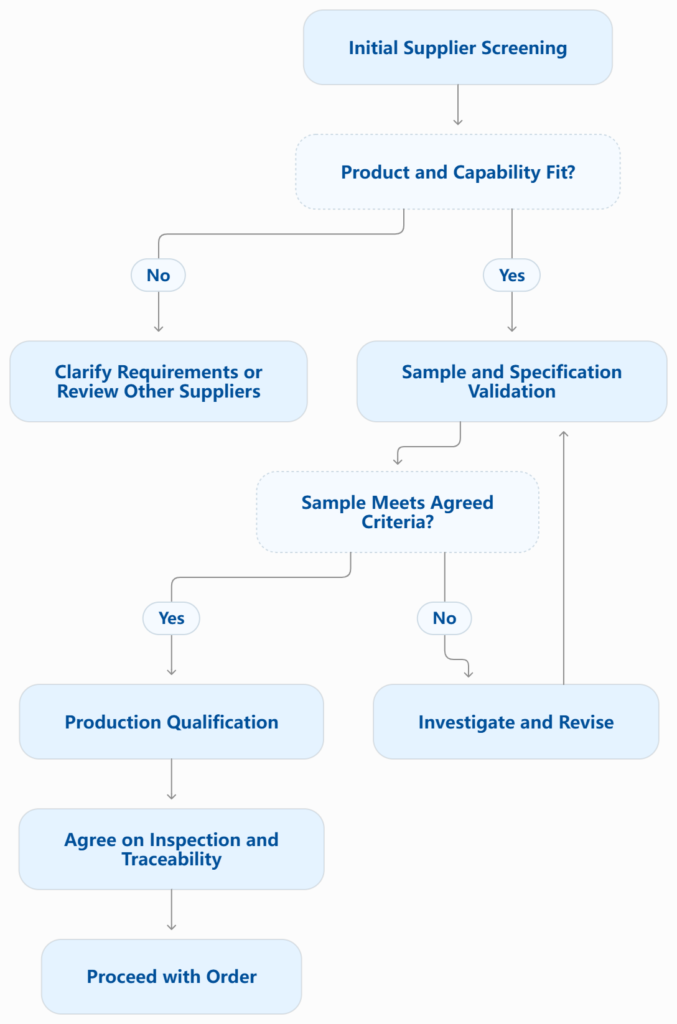
This staged approach helps buyers avoid making a long-term sourcing decision based only on a quotation or a successful demonstration.
11. Questions Buyers Should Ask an RFID Manufacturer
Before selecting a supplier, buyers can use the following questions in a technical or procurement discussion.
- Which RFID products do you manufacture, customize, or distribute?
- Which manufacturing processes are performed directly or through controlled manufacturing partners?
- Which chip and antenna options are available for this application?
- What quality checks are performed on this specific product?
- How do you verify RFID functionality and RF performance?
- Can you provide sample inspection or test records?
- How do you control product specifications across repeat orders?
- How are production lots identified?
- Which quality documents and certificates can you provide?
- What information do you need to evaluate our application and prepare a suitable quotation?
The answers should be specific enough to verify. If a supplier cannot answer a question immediately, it is reasonable to ask for the information to be confirmed by its engineering or quality team.
Evaluate Evidence, Not Marketing Claims
Choosing an RFID manufacturer is a process of reducing technical and supply-chain risk.
A suitable supplier should be able to explain its actual product scope, manufacturing responsibilities, engineering knowledge, quality controls, and ability to meet agreed specifications.
Buyers should look beyond the first sample and consider how product requirements, testing methods, inspection records, and production consistency will be managed across future orders.
There is no single checklist that guarantees a successful supplier relationship. The appropriate evaluation criteria depend on the RFID product, its application, the consequences of failure, and the buyer’s quality requirements.
For procurement teams and system integrators, the most effective approach is to define measurable requirements before requesting quotations, evaluate samples under realistic conditions, and agree on product acceptance criteria before production.
Considering an RFID product sourcing or customization project?
HIVE RFID supplies a range of RFID products, including UHF RFID tags and labels, anti-metal RFID tags, laundry RFID tags, HF/NFC products, RFID readers, PDA devices, and printers.
If you are evaluating suppliers, you can share your product type, application, technical specifications, operating environment, and inspection requirements with HIVE RFID. These details provide a practical starting point for discussing product suitability, customization options, and order-specific requirements.


