
Why RFID Tag Quality Cannot Be Judged by Appearance Alone
An RFID tag may look perfectly acceptable and still fail to perform reliably.
A label can have a clean surface, accurate dimensions, and good printing quality while containing a damaged chip connection, an antenna defect, incorrect encoded data, or inconsistent RF performance. These problems may not become apparent until the tags are installed, encoded, or used in an actual RFID system.
For buyers, this creates an important supplier evaluation question: What quality control checks should an RFID tag manufacturer perform before shipping finished products?
A reliable quality control process should not depend on a single final inspection. It should cover incoming materials, manufacturing operations, electrical and functional verification, data encoding, RF performance, physical condition, and batch-level records.
The exact inspection plan depends on the product. A standard UHF RFID label, an anti-metal tag, a laundry tag, and an HF/NFC product have different structures and operating requirements. Therefore, they should not automatically be evaluated using identical criteria.
This guide explains the main quality control checkpoints manufacturers should consider and the questions buyers can ask when qualifying an RFID tag supplier.
2. What Determines RFID Tag Quality?
RFID tag quality is a combination of several characteristics rather than one measurement.
A tag must be physically intact, electrically functional, correctly encoded when encoding is required, and capable of communicating under its intended operating conditions.
The main quality dimensions include:
| Quality dimension | What it concerns | Example of a potential problem |
|---|---|---|
| Component quality | Chip, antenna, substrate, adhesive, and other materials | Damaged chip or inconsistent material |
| Electrical connection | Connection between the chip and antenna | Weak or defective chip attachment |
| Functional performance | Whether the tag responds to a compatible reader | Tag cannot be inventoried |
| Data accuracy | Whether the required information is correctly encoded | Incorrect or duplicated EPC |
| RF performance | Whether the tag meets agreed RF requirements | Sensitivity or read performance outside the acceptance range |
| Physical quality | Dimensions, appearance, construction, and finishing | Delamination or damaged edges |
| Environmental suitability | Performance under specified application conditions | Failure after heat, moisture, chemicals, or mechanical stress |
| Batch consistency | Whether production lots meet the same agreed requirements | Significant variation between batches |
These dimensions are connected. For example, a chip attachment defect may cause a functional failure, while an antenna or material variation may affect RF performance.
A useful quality system therefore combines component inspection, process control, functional testing, and final product acceptance.
3. Incoming Material and Component Inspection
Quality control should begin before the RFID tag is assembled.
Incoming inspection helps manufacturers identify unsuitable or inconsistent materials before they enter production. This is particularly important for customized RFID products, where the chip, antenna design, substrate, adhesive, and protective materials may be selected for a specific application.
3.1 Chip and electronic component verification
The inspection may include:
- Confirming the chip model against the approved product specification.
- Checking supplier and material identification records.
- Verifying that received components are properly stored and handled.
- Inspecting for visible damage or contamination where applicable.
- Confirming that the supplied component matches the approved design or bill of materials.
Chip model matters because different RFID ICs can have different memory configurations, operating characteristics, and application features.
For UHF products, buyers may specify a particular chip family or memory requirement. For HF/NFC products, the required frequency, protocol, memory, and application functionality should also be confirmed.
3.2 Antenna and inlay inspection
The antenna is a critical part of an RFID tag. Its geometry, material, and manufacturing consistency influence how the tag communicates with a reader.
Depending on the inlay construction, incoming inspection may consider:
- Antenna dimensions and layout.
- Visible scratches, breaks, or deformation.
- Substrate condition.
- Chip position and alignment.
- Inlay spacing and positioning.
- Consistency with the approved design.
Some defects are visible, while others require electrical or RF testing.
3.3 Substrate, adhesive, and protective materials
For RFID labels and tags, the supporting materials are also important.
Inspection criteria may include:
- Material type and thickness.
- Surface condition.
- Adhesive type and application requirements.
- Liner and release characteristics, where applicable.
- Protective housing or encapsulation material.
- Compatibility with the intended conversion and application process.
A label designed for a smooth indoor surface may require different materials from a tag intended for outdoor use, metal mounting, or industrial laundry.
Buyer consideration: Ask whether the manufacturer verifies incoming materials against approved specifications and how material substitutions are controlled.
4. Chip and Antenna Functionality Checks
The chip and antenna must work together as an RFID transponder. A physically intact assembly is not necessarily a functional one.
4.1 Chip attachment and electrical connection
The chip must be correctly connected to the antenna. Depending on the inlay technology and assembly method, this connection may involve conductive adhesives, bonding processes, or other specialized interconnection techniques.
Potential problems include:
- Misaligned chip placement.
- Incomplete or weak bonding.
- Damaged connection areas.
- Contamination around the connection.
- Mechanical damage during handling or conversion.
A connection defect may cause a tag to become unreadable or behave inconsistently.
Manufacturers should establish appropriate process controls for chip placement and attachment. Depending on the production method, inspection may combine visual examination, process monitoring, electrical checks, and functional testing.
4.2 Functional verification
A basic functional check determines whether a tag can communicate with a compatible reader.
For a UHF RFID tag, this may involve checking whether the reader can inventory the tag and retrieve its identifier.
For HF/NFC products, the relevant check should use compatible equipment and the product’s intended protocol and operating conditions.
Functional verification can help identify:
- Non-responsive tags.
- Incorrect or incomplete communication.
- Intermittent responses.
- Obvious failures associated with chip or antenna defects.
However, a successful read at one distance or power level does not prove that the tag meets every performance requirement.
4.3 Antenna and inlay performance
Antenna inspection should not stop at checking whether the metal pattern looks intact.
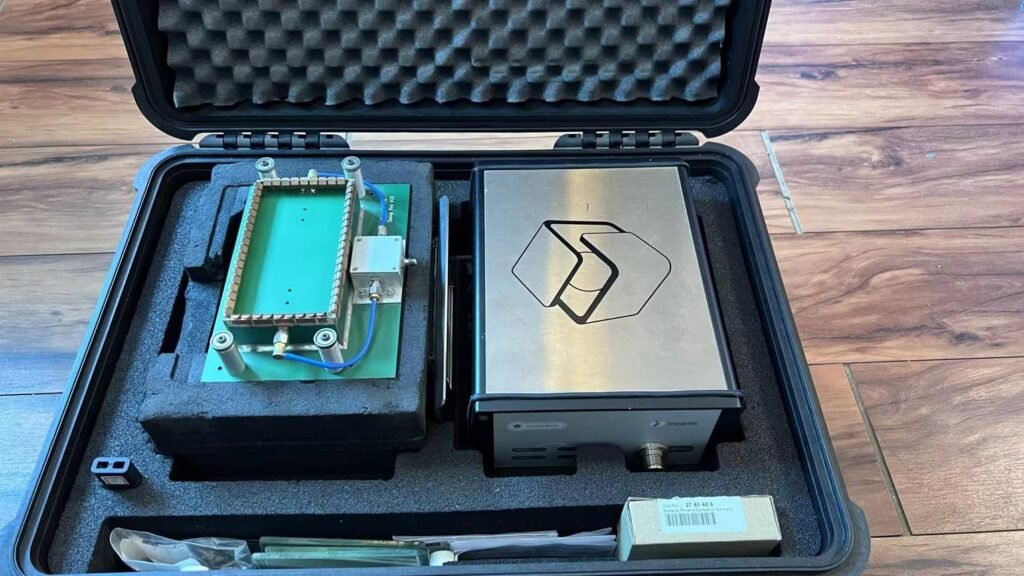
Depending on the product and test equipment, manufacturers may evaluate electrical or RF characteristics to identify abnormal antenna behavior.
For example, RF performance evaluation may help reveal variations that are not visible during ordinary visual inspection.
The method should be appropriate to the tag design. A measurement technique suitable for one type of UHF inlay may not be directly applicable to a finished on-metal tag or an HF/NFC product.
5. Encoding and Data Verification
For products that are supplied pre-encoded, data verification is an essential quality checkpoint.
An RFID tag can communicate successfully but still contain incorrect information. This can cause problems in inventory management, authentication, asset tracking, and other applications.
5.1 Verify the required data
For UHF products used in EPC-based applications, the manufacturer or encoding provider should verify that the encoded data matches the customer’s approved data specification.
This may include:
- EPC format and length.
- Required identifier values.
- Memory-bank configuration, where specified.
- User memory content, if required.
- Access or kill password configuration, if applicable.
- Correct association between the physical label and its assigned data record.
The GS1 EPC Tag Data Standard defines EPC encoding and related tag-memory information. Buyers using GS1-based systems should confirm that the encoding format follows the applicable requirements.
5.2 Check for duplicate identifiers
In serialized applications, each tag may need a unique identifier.
A duplicate EPC can cause two different physical items to appear as the same item in an inventory or tracking system.
A suitable encoding process should therefore include controls for:
- Duplicate identifier detection.
- Correct data assignment.
- Encoding error handling.
- Reconciliation of rejected or replaced tags.
- Verification of the final encoded data set.
The exact controls depend on the customer’s data workflow and whether encoding is performed by the tag manufacturer, a converter, or another service provider.
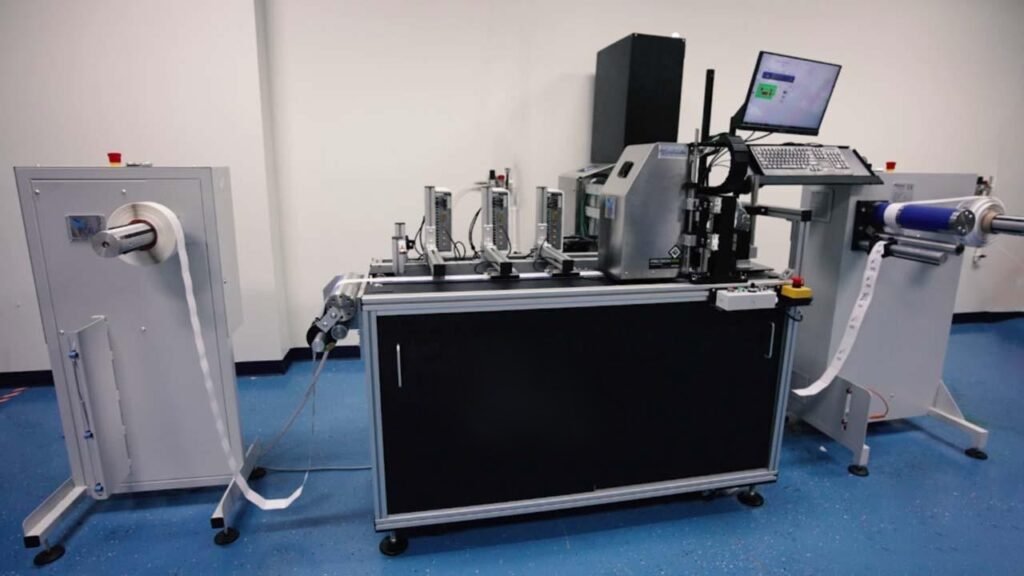
5.3 Verify printed and encoded information
When RFID labels include human-readable text or barcodes, the printed information should correspond with the encoded RFID data.
For example, if a label displays a serial number, the serial number should match the corresponding encoded record when the application requires that relationship.
A data verification process may compare:
- The customer-approved data file.
- The information encoded into the RFID chip.
- The human-readable printing.
- The barcode or QR code, if included.
6. RFID Reading Performance Testing
Reading performance is one of the most important quality characteristics for an RFID tag, but it is also one of the easiest to misunderstand.
A tag that can be read is not automatically a tag that meets the customer’s performance requirements.
6.1 Why a simple read test is not enough
RFID performance depends on multiple factors, including:
- Chip characteristics.
- Antenna design.
- Tag dimensions and construction.
- Operating frequency.
- Reader and antenna configuration.
- Reader output power.
- Tag orientation and polarization.
- Mounting surface and nearby materials.
- Test environment.
For UHF RFID, a tag’s response is related to the RF energy received from the reader and the tag’s ability to backscatter a detectable signal. The Gen2 air-interface standard defines the communication procedures between compatible readers and tags, but it does not mean that every tag will achieve the same read range in every application.
6.2 Define measurable performance criteria
Before production, the manufacturer and buyer should agree on which RF characteristics matter.
Depending on the product and application, these may include:
- Tag sensitivity or activation threshold.
- Read performance under specified conditions.
- Response consistency.
- Performance across the intended frequency range.
- Performance in a defined mounting or application setup.
For example, a general-purpose UHF label and an anti-metal UHF tag should not automatically be tested under the same mounting conditions. An anti-metal tag should be evaluated in a configuration representative of its intended metal surface.
Similarly, a laundry tag should be assessed in a way that reflects the intended textile application and reading environment.
6.3 Keep test conditions consistent
A meaningful comparison between samples or production batches requires controlled test conditions.
The test record should identify relevant settings such as:
| Test condition | Why it matters |
|---|---|
| Reader model and configuration | Different readers may produce different results |
| Antenna type and position | Antenna characteristics affect coupling and read results |
| Frequency or regional band | Tag performance may vary across frequencies |
| Reader output power | A higher power setting may make a weaker tag appear acceptable |
| Tag orientation | Orientation affects coupling and polarization |
| Mounting surface | Metal, liquid, and other materials can change performance |
| Test distance and environment | The setup affects repeatability |
| Measurement method | Different methods may produce results that are difficult to compare |
A technical test report should state the conditions used. RF test results without test settings are difficult for buyers to interpret or reproduce.
6.4 Consider near-field and far-field evaluation where relevant
Some RFID quality programs distinguish between near-field and far-field performance checks.
GS1 Australia guidance describes measures for maintaining tag readability, including appropriate verification of near- and far-field performance for relevant tag and label manufacturing processes.
The appropriate method depends on the product and its intended application. Buyers should ask which performance characteristics are measured, how the test is performed, and what acceptance range applies.
7. Physical and Environmental Inspection
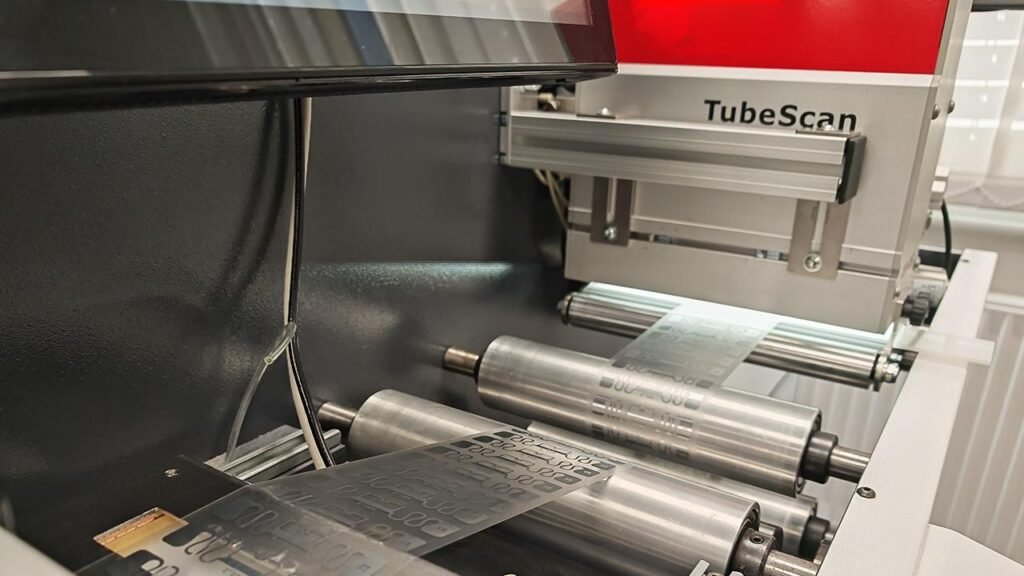
RFID tags are supplied in different forms, including labels, inlays, rigid tags, flexible tags, anti-metal tags, and laundry tags. Their physical acceptance criteria should reflect their intended construction and use.
7.1 Physical dimensions and appearance
Typical inspection items may include:
- Overall length, width, and thickness.
- Shape and edge condition.
- Surface scratches, stains, or contamination.
- Printing position and legibility.
- Chip and antenna positioning, where visible.
- Delamination, bubbles, or wrinkles.
- Housing integrity for enclosed tags.
- Roll direction, spacing, and winding quality for roll products.
For customized products, dimensions and appearance should be compared with approved drawings, samples, or product specifications.
7.2 Adhesive and label material inspection
For RFID labels, adhesive performance can be just as important as the RFID function.
Depending on the application, the manufacturer and buyer may need to agree on:
- Adhesive type.
- Compatibility with the target surface.
- Initial tack or bonding behavior.
- Adhesion after specified environmental exposure.
- Label removal requirements, if relevant.
- Liner and dispensing characteristics.
A label that reads correctly but detaches from the target item may still be unsuitable for the application.
7.3 Environmental and durability testing
Environmental testing should be selected according to the product’s actual operating conditions.
| Product type | Potential evaluation areas |
|---|---|
| UHF RFID labels | Adhesion, temperature exposure, humidity, handling, and surface compatibility |
| Anti-metal RFID tags | Mounting stability, housing integrity, mechanical impact, and RF performance on the specified metal surface |
| Laundry RFID tags | Repeated washing, drying, heat, pressure, chemicals, and mechanical handling |
| HF/NFC products | Intended operating conditions, material compatibility, and functional stability |
| Customized RFID products | Application-specific temperature, moisture, chemical, vibration, or mechanical exposure |
These are possible evaluation areas, not universal tests that every RFID product must pass.
For example, a tag intended for industrial laundry may require repeated process-cycle testing, while a standard indoor RFID label may not need the same durability program.
The important principle is to test against defined requirements. A statement such as “waterproof,” “industrial grade,” or “high durability” is not a substitute for a documented test method and acceptance criterion.
8. Batch Consistency and Traceability
Testing an individual sample does not automatically demonstrate that an entire production batch is consistent.
Buyers should understand how the manufacturer controls variation across production runs and how inspection results are associated with specific lots.
8.1 Define the production lot
A manufacturer and buyer should agree on what constitutes a production lot.
Depending on the production process, lot identification may relate to:
- Production date or shift.
- Material or component batch.
- Chip or inlay batch.
- Production order.
- Product model and specification revision.
- Encoding or finishing batch.
A clear lot definition helps ensure that inspection results can be connected to the products being shipped.
8.2 Use appropriate sampling and inspection plans
Not every inspection must use the same sampling approach.
Some critical characteristics may require process monitoring or more extensive functional verification. Other characteristics, such as appearance or dimensions, may be suitable for sampling under an agreed inspection plan.
Acceptance sampling standards such as ISO 2859-1 provide statistical methods for lot-by-lot inspection by attributes. The sampling plan should be agreed in advance, including the inspection level, AQL, sample size, and acceptance/rejection rules.
AQL should not be misunderstood as a promise that a particular percentage of defects will be present or that every accepted lot is defect-free. It is a parameter used within a defined sampling system.
The buyer should also clarify whether the inspection is:
- 100% functional testing.
- Random sampling.
- Process-based monitoring.
- A combination of these methods.
Do not assume that a supplier performs 100% inspection unless the scope and records confirm it.
8.3 Compare production batches
For recurring orders, buyers should compare results across batches rather than evaluating only the first sample.
Useful comparison data may include:
- Functional pass/fail results.
- RF measurement results under the same conditions.
- Dimensional inspection results.
- Encoding verification results.
- Defect categories and corrective actions.
- Material and production-lot identifiers.
If a new batch shows a meaningful change, the buyer and manufacturer should investigate whether the cause is related to materials, process settings, design revisions, or test conditions.
8.4 Maintain traceability records
Traceability makes it easier to investigate problems after delivery.
Depending on the manufacturer’s system and customer requirements, records may include:
- Product model and revision.
- Production order or lot number.
- Relevant material batches.
- Inspection date.
- Inspection method and equipment.
- Sample size and results.
- Nonconformance records.
- Corrective action information.
- Shipment identification.
The exact records available should be confirmed with the supplier. Buyers should not assume that every manufacturer maintains the same level of batch-level documentation.
9. Questions Buyers Should Ask RFID Manufacturers
A supplier’s quality capability should be evaluated through specific questions rather than broad claims such as “strict quality control” or “high-quality production.”
The following checklist can help buyers conduct a more useful supplier assessment.
| Evaluation area | Questions to ask |
|---|---|
| Incoming materials | How do you verify chips, antennas, substrates, adhesives, and other components? |
| Chip attachment | What controls are used to monitor chip placement and attachment quality? |
| Functional testing | How do you identify non-responsive or defective tags? |
| RF performance | Which RF characteristics do you measure, and under what test conditions? |
| Encoding | How do you verify encoded data and prevent duplicate identifiers? |
| Physical inspection | Which dimensions and appearance characteristics are checked? |
| Environmental testing | Which environmental tests are available for this specific product? |
| Sampling | What inspection plan and acceptance criteria apply to the order? |
| Batch consistency | How do you compare quality results between production batches? |
| Traceability | Can inspection records be linked to the production lot or shipment? |
| Documentation | Which inspection reports, test records, or certificates can you provide? |
| Nonconformance handling | What happens when a product or batch does not meet the agreed criteria? |
What quality documents should buyers request?
The required documents depend on the product and procurement process. Buyers may request:
- Product specification or approved drawing.
- Sample evaluation report.
- Functional test summary.
- RF performance test report, where available.
- Encoding verification record, where applicable.
- Dimensional or appearance inspection record.
- Environmental test report, if specified and performed.
- Batch identification information.
- Relevant product certificates or declarations, where applicable.
A supplier should clearly distinguish between a document that is available, a test that can be arranged, and a test that is part of its routine production process.
This distinction is particularly important when qualifying a new supplier or approving a customized RFID product.
10. Conclusion: Define Quality Before Production, Not Only Before Shipment
RFID tag quality control should be treated as a structured manufacturing and verification process.
Incoming material inspection helps prevent unsuitable components from entering production. Chip and antenna checks help identify assembly problems. Functional and RF tests evaluate whether tags communicate as expected. Encoding verification protects data accuracy. Physical and environmental inspections help confirm application suitability. Finally, sampling, batch records, and traceability support consistent production and supplier accountability.
For buyers, the most important step is to define product-specific acceptance criteria before mass production begins.
Do not rely only on appearance, a single successful read, or a general supplier statement about quality. Ask what is tested, how it is tested, under which conditions, what constitutes a pass, and whether the results can be linked to the production batch.
Discuss Your RFID Product Quality Requirements with HIVE RFID
HIVE RFID supplies RFID products for different B2B applications, including UHF RFID labels and tags, anti-metal RFID tags, laundry RFID tags, HF/NFC products, and customized RFID solutions.
If you are evaluating a new RFID supplier or preparing a customized production order, share your product requirements and quality expectations with our team.
To help us understand your project, please provide:
- RFID product type and application.
- Required chip and antenna specifications, if known.
- Functional and RF performance requirements.
- Mounting surface and operating environment.
- Required physical and environmental characteristics.
- Encoding and data verification requirements.
- Inspection criteria and sampling requirements.
- Required quality documents.
- Expected order quantity.
HIVERFID can review the requirements and discuss suitable product configurations and quality acceptance criteria with you.


