
Requesting a quotation for a custom RFID tag sounds straightforward. You send a product photo, mention the approximate size and quantity, and ask the manufacturer for a price.
However, RFID tags are not simply interchangeable labels. Their performance depends on the application, operating frequency, antenna design, chip selection, mounting surface, physical construction and operating environment.
A tag designed for a cardboard carton may not work properly when attached to a metal asset. A compact tag suitable for a handheld inventory application may not be the best choice for a portal where items move quickly through a reading zone. Even when two tags look similar, differences in their chip, antenna and materials can make them unsuitable for the same application.
For RFID system integrators and OEM buyers, incomplete specifications can create unnecessary communication, repeated sample development and inaccurate cost comparisons.
The solution is to prepare the right information before sending an RFQ.
You do not need to know every technical detail before contacting a manufacturer. What matters most is providing a clear description of the application, installation conditions and project requirements. A capable RFID manufacturer can then help evaluate the technical options.
This guide explains what information to prepare when requesting a quotation for custom RFID tags.
1. Describe the Application and the Item Being Tagged
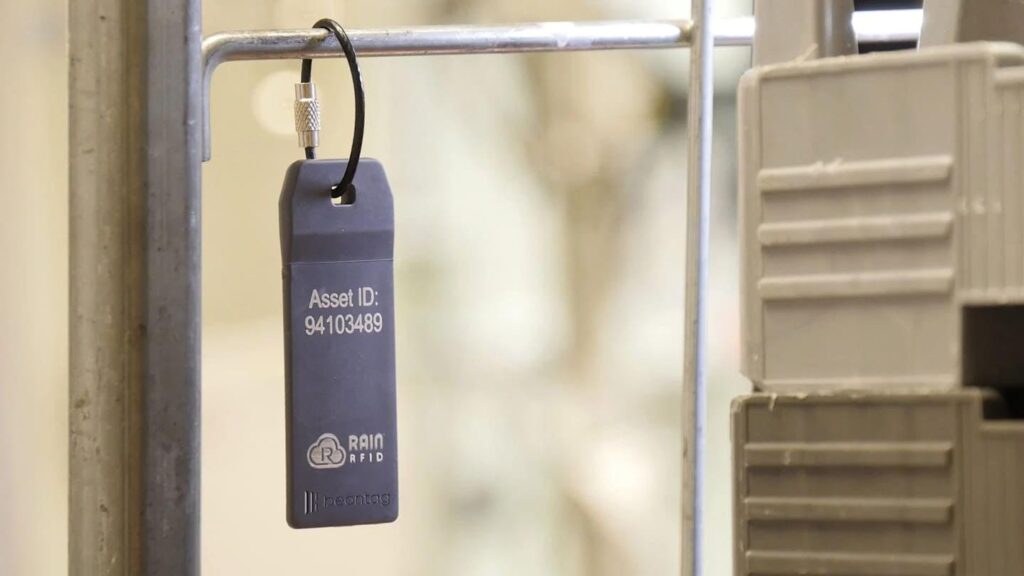
Ironside Classic: Rugged RFID UHF On-Metal Tag for Industrial
The first question is not necessarily which chip you want. It is what you want to identify and track.
The same RFID technology can be used in very different applications, including:
- Industrial asset tracking
- Warehouse and logistics management
- Retail product identification
- Jewelry management
- Laundry and textile tracking
- Medical equipment management
- Returnable transport item tracking
- Manufacturing work-in-process tracking
Each application creates different design requirements.
For example, an RFID tag used on a plastic storage container may have different antenna and mounting requirements from one attached to a metal machine component. A laundry tag must be evaluated for repeated washing and textile handling, while a jewelry tag may need a compact form factor that fits a small item or packaging.
When contacting a manufacturer, provide:
| Information | What to describe |
|---|---|
| Application | Asset tracking, inventory, laundry, jewelry, logistics, etc. |
| Tagged item | The actual product, equipment or asset |
| Item material | Plastic, metal, glass, fabric, cardboard or other material |
| Application process | How the item is identified, stored, moved or inspected |
| Tagging location | Where the RFID tag will be installed |
| Reading scenario | Handheld scanning, fixed reader, portal, conveyor or another setup |
Practical tip: If possible, attach a photo of the item and mark the proposed tag location. A simple annotated photo can communicate more useful information than a long but vague product description.
2. Specify the RFID Frequency and Deployment Region
RFID tags operate at different frequencies. The most common categories include:
- LF (Low Frequency)
- HF (High Frequency)
- UHF (Ultra-High Frequency)
These technologies are not interchangeable. They have different communication characteristics, standards and application scenarios.
For example, passive UHF RFID, also known as RAIN RFID, is widely used for item identification, inventory and asset tracking. It operates within regional frequency allocations in the 860–930 MHz range and commonly uses the GS1 EPC Gen2 air-interface protocol. GS1 Reference+1
If your project already uses a particular RFID reader system, provide the reader’s operating frequency or model number.
Also specify the countries or regions where the tags will be deployed.
| RFQ field | Example information |
|---|---|
| RFID frequency | UHF / HF / LF |
| Deployment region | United States, Europe, Japan, etc. |
| Protocol | EPC Gen2 / ISO standard, if known |
| Reader model | Manufacturer and model number, if available |
| Existing system | Description of the current RFID infrastructure |
Regional information matters because UHF RFID operating frequencies and regulatory requirements vary between markets.
If you are unsure about the exact frequency configuration, provide the reader model and deployment country. The manufacturer can help clarify the requirement.
3. Explain the Reading Requirements
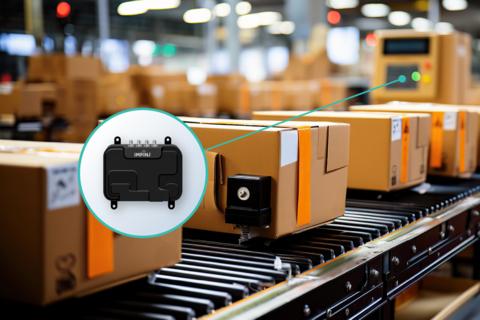
One of the most common mistakes in an RFID inquiry is asking for a specific reading distance without explaining the reading conditions.
For example:
- “We need a 5-meter reading range.”
- “The tag must be readable from a long distance.”
- “We need high-performance RFID tags.”
These descriptions are not enough to determine whether a tag design is suitable.
The effective reading range depends on multiple factors, including reader output power, reader antenna gain and polarization, tag orientation, RF interference and the surrounding environment. GS1 also emphasizes that the shape of the readable zone can be more important than the maximum distance itself. GS1 GO Customer Service Portal+1
Instead of providing only a target distance, describe the actual reading scenario.
| Question | Information to provide |
|---|---|
| Required distance | Approximate minimum or target reading distance |
| Reading method | Handheld, fixed reader, gate, tunnel or conveyor |
| Item movement | Stationary, manually moved or automatically conveyed |
| Tag orientation | Fixed direction or unpredictable orientation |
| Reading volume | One item at a time or multiple tags simultaneously |
| Reading speed | Approximate item movement speed, if relevant |
| Reader equipment | Reader and antenna model, if known |
For example, a buyer might describe the requirement as:
The tags will be attached to plastic containers moving through a fixed reading station. The target reading distance is approximately 2–3 meters. Multiple containers may pass through the reading zone at the same time.
This is much more useful than simply asking for a “long-range UHF tag.”
Remember that the final performance must be evaluated using the actual reader setup and application conditions.
4. Identify the Mounting Surface and Installation Position
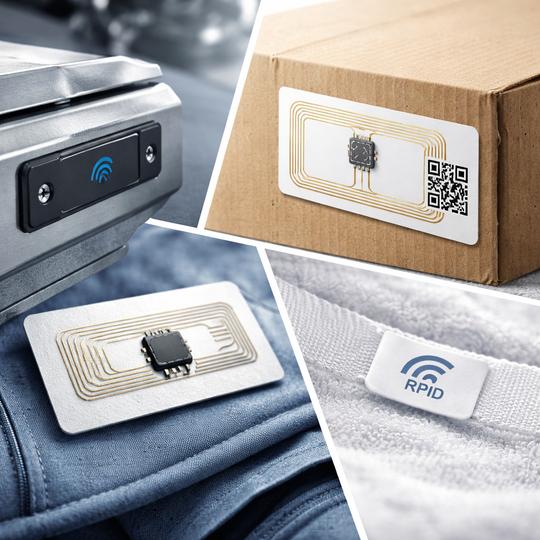
The material and geometry of the tagged object can significantly affect RFID tag performance.
Before requesting a quotation, explain what surface the tag will be attached to.
Common mounting surfaces include:
- Metal
- Plastic
- Glass
- Wood
- Cardboard
- Fabric
- Composite materials
Metal deserves particular attention in UHF RFID applications. A conventional UHF label may experience detuning or reduced performance when attached directly to a metal surface. An anti-metal RFID tag uses a design intended for the relevant metal-mounting conditions.
Also describe the installation position:
- Flat surface
- Curved surface
- Narrow or recessed area
- Inside a housing
- Attached with adhesive
- Fixed using screws, rivets or another mechanical method
| Information | Why it matters |
|---|---|
| Surface material | Helps determine the suitable antenna and tag construction |
| Surface shape | Affects physical fit and potentially RF performance |
| Installation position | Determines available space and tag orientation |
| Mounting method | Influences adhesive, housing or mechanical design |
| Nearby materials | Helps identify potential RF interference or detuning conditions |
A useful addition: Send a photo showing the installation location, together with approximate dimensions of the available mounting area.
For difficult applications, a physical sample of the tagged object can be even more valuable.
5. Provide the Required Dimensions and Physical Construction
A custom RFID tag must fit the product and installation environment.
The manufacturer needs to understand not only the maximum tag size but also the space available for the antenna and the complete tag construction.
Prepare the following information:
| Parameter | What to provide |
|---|---|
| Length and width | Maximum acceptable dimensions |
| Thickness | Maximum available thickness or height |
| Shape | Rectangular, circular, square, irregular or custom |
| Structure | Label, hard tag, flexible tag, PCB-style or other form |
| Material preference | Paper, PET, ABS or another material, if specified |
| Attachment | Adhesive, screw, rivet, cable tie or other method |
| Appearance | Color, logo, printed information or visual requirements |
If you have an existing tag, send a physical sample or technical drawing.
If the design is completely new, a rough sketch with dimensions is a useful starting point.
Do not assume that a tag can simply be reduced in size without affecting its RF performance. The antenna is an important part of the design, and the available physical space can constrain the possible construction.
6. Describe the Operating Environment
An RFID tag may perform well in a controlled indoor environment but face very different conditions in actual deployment.
For example:
- Outdoor exposure to sunlight and rain
- High or low operating temperatures
- Repeated washing and drying
- Exposure to chemicals or cleaning agents
- Vibration and mechanical impact
- Dust, moisture or frequent handling
- Long-term attachment to industrial equipment
The more demanding the environment, the more important it is to describe the actual conditions.
| Environmental factor | Details to provide |
|---|---|
| Temperature | Expected operating and storage temperature |
| Moisture | Indoor, outdoor, wet or frequently washed |
| Chemicals | Cleaning agents, oils, solvents or other exposure |
| Mechanical stress | Impact, bending, abrasion or vibration |
| Service life | Expected duration of use |
| Cleaning process | Washing, sterilization or other procedures |
| Installation location | Indoor, outdoor, warehouse, factory or vehicle |
Avoid using vague descriptions such as “waterproof,” “industrial grade” or “high temperature resistant” without explaining what the tag will actually experience.
For example, a tag exposed to occasional splashing has different requirements from one repeatedly immersed in water or subjected to industrial washing.
Specific operating conditions help the manufacturer assess suitable materials and construction options.
7. Clarify the Chip, Memory and Data Requirements
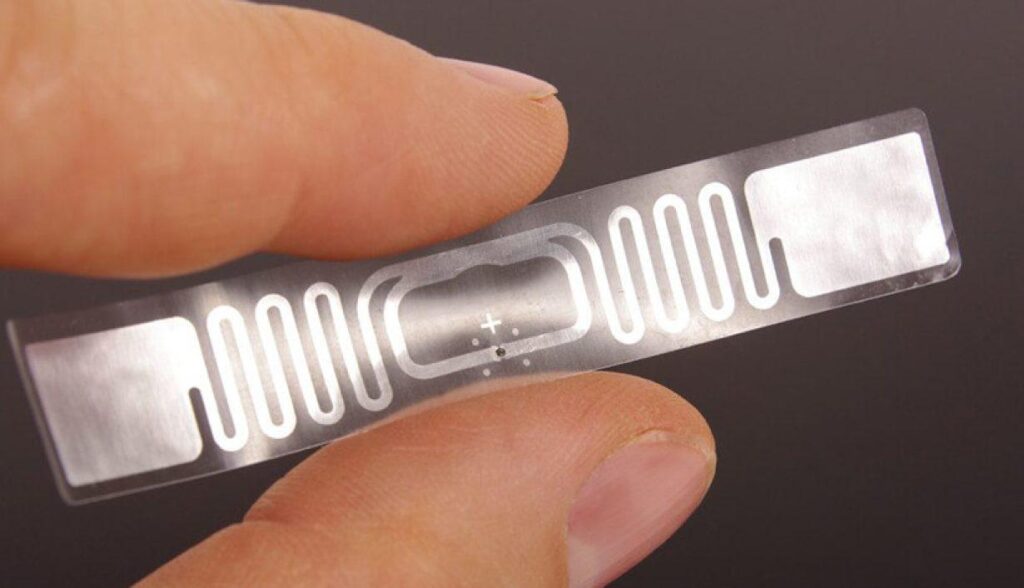
If your project already specifies an RFID chip, include the chip manufacturer and model.
However, if you do not have a chip specification, you do not necessarily need to select one before requesting a quotation. You can describe the system requirements and ask the manufacturer to recommend a suitable option.
For UHF RFID, it is useful to distinguish between the chip’s memory structure and the information your application actually needs.
A typical RAIN RFID chip includes several memory banks:
| Memory bank | General purpose |
|---|---|
| Reserved | Stores access and kill passwords |
| TID | Contains tag identification information |
| EPC | Stores the Electronic Product Code or another identifier |
| User | Stores additional application-specific data, when supported |
These memory areas are defined within the Gen2 RFID ecosystem. The available memory capacity and configuration depend on the selected chip. NXP Semiconductors+1
For an RFQ, clarify:
- Do you need a specific chip model?
- Is a 96-bit EPC sufficient, or do you require a different EPC length?
- Do you need User memory?
- Will each tag have a unique serial number?
- Does the project require pre-encoding?
- Are passwords, locking or other chip functions required?
- Does the system follow a GS1 identification structure?
If the project uses an existing encoding specification, provide a sample data record or encoding document.
Important: More memory is not automatically better. The appropriate chip should match the data structure and system requirements rather than simply having the largest available memory.
8. Specify Printing, Encoding and Serialization Requirements
Some custom RFID tags are supplied as unprinted components. Others require printed information, barcodes or pre-encoded RFID data.
These are separate requirements and should be explained clearly.
Printing requirements
Specify whether the tag needs:
- Company logo
- Product name or description
- Human-readable serial number
- Barcode or QR code
- Variable information
- Color printing
- Specific artwork or layout
If you already have artwork, provide the original file and indicate the required version.
Encoding requirements
If the tags need to be encoded before shipment, provide:
- EPC or other required data format
- Required memory bank
- Data length
- Serialization rules
- Sample encoding data
- Whether each tag must have a unique identifier
For example, a project may require every tag to contain a unique EPC that corresponds to a serial number printed on its surface.
In that case, the manufacturer needs to understand how the printed number and encoded data are associated.
Label and roll requirements
For RFID labels intended for printing or automated application, additional details may be necessary:
- Label dimensions
- Label pitch and gap
- Roll direction
- Core size
- Maximum roll diameter
- Printer model
- Inlay position within the label
These requirements can affect compatibility with printing and encoding equipment. Rivotag
9. Provide the Estimated Quantity and Project Stage
Quantity is an important part of a custom RFID tag quotation.
However, the manufacturer should understand the project stage as well as the expected volume.
For example, the requirements for a small prototype evaluation may differ from those for a recurring production program.
Provide the following information:
| RFQ information | Example |
|---|---|
| Sample quantity | Number of samples needed for evaluation |
| Pilot quantity | Estimated quantity for pilot testing |
| Initial order quantity | Expected first production volume |
| Annual demand | Estimated annual usage, if known |
| Order frequency | One-time or recurring requirement |
| Project stage | Concept, prototype, validation or production |
If the final quantity is not yet confirmed, provide a reasonable estimate or possible volume range.
For example:
We are currently evaluating the design and need samples for application testing. The expected annual demand will be determined after the pilot project.
This helps the manufacturer understand the commercial context without requiring a firm purchase commitment at the initial inquiry stage.
10. Explain the Sample, Testing and Approval Requirements
A quotation is only the beginning of a custom RFID tag project.
Before mass production, the proposed design may need to be evaluated in the actual application.
Tell the manufacturer how the tag will be approved.
Relevant questions include:
- Do you need engineering samples before a pilot order?
- Will samples be tested on actual tagged objects?
- Do you need to evaluate reading distance or read consistency?
- Will the tags be tested with a specific reader model?
- Are mechanical, environmental or durability tests required?
- Is a sample approval document required?
- Are there customer-specific acceptance criteria?
If you already have a test procedure, share it.
If not, explain what the system must achieve. The manufacturer can then help identify which technical parameters should be evaluated.
For example, a system integrator developing a warehouse asset-tracking solution may need to confirm that tags can be read consistently when attached to actual equipment and scanned using the intended handheld reader.
A sample that works under one test condition should not automatically be considered suitable for every installation environment.
E. What If You Do Not Know All the Technical Specifications?
This is a common situation, especially for system integrators working with new applications.
You may know the item to be tagged, the installation location and the required reading process, but not know which chip, antenna or material should be used.
That is a perfectly reasonable starting point for a custom RFID inquiry.
You can divide the information into three levels:
| Information level | What you should provide | Who can help determine it? |
|---|---|---|
| Application requirements | Tagged item, surface, reading scenario and environment | Buyer / system integrator |
| Project constraints | Dimensions, mounting method, quantity and deployment region | Buyer / project team |
| Technical design | Chip, antenna, material combination and tag construction | RFID manufacturer, with buyer validation |
The buyer should communicate the real application conditions as accurately as possible. The manufacturer can then evaluate possible tag designs.
For system integrators, this division is particularly useful. You do not need to finalize every component specification before discussing a project with a tag manufacturer.
What you should avoid is leaving critical application information undefined, such as whether the tag will be mounted on metal or whether it must withstand repeated industrial washing.
F. Custom RFID Tag RFQ Checklist
The following checklist can be copied into an inquiry and completed before contacting a manufacturer.
Custom RFID Tag RFQ Information
Use this as a preparation checklist. Mark unknown technical details as “To be recommended.”
| Category | Information to prepare |
|---|---|
| Application | Application type and tagged item |
| Frequency | LF, HF or UHF |
| Region | Countries or deployment markets |
| Reader | Reader model and antenna, if known |
| Reading | Target distance, reading method and tag orientation |
| Surface | Metal, plastic, fabric, cardboard, etc. |
| Dimensions | Required length, width and thickness |
| Construction | Label, hard tag, flexible tag or custom structure |
| Mounting | Adhesive, screw, rivet or other method |
| Environment | Temperature, moisture, chemicals and mechanical stress |
| Chip | Required chip model, if specified |
| Memory | EPC length, User memory and encoding requirements |
| Printing | Logo, barcode, serial number or artwork |
| Quantity | Sample, pilot, initial and estimated annual volume |
| Testing | Reader setup, test conditions and acceptance criteria |
| Supporting files | Photos, drawings, samples and existing specifications |
Suggested attachments
- Product or asset photos
- Installation-location photos
- Dimensioned drawings
- Existing tag samples
- Reader model information
- Encoding data examples
- Environmental or test requirements
You do not need to complete every field before making an inquiry. Providing the information that is already available—and clearly marking unknown items—will make the discussion more productive.
G. Common Mistakes When Requesting a Custom RFID Tag Quote
| Common mistake | Why it causes problems | Better approach |
|---|---|---|
| Asking only for a price | The manufacturer cannot evaluate the actual application | Describe the application and installation conditions |
| Providing only tag dimensions | Physical size alone does not determine RF suitability | Include surface material and reading requirements |
| Ignoring the deployment region | Regional frequency requirements may differ | Identify the target countries |
| Requesting a long read range without conditions | Reading performance depends on the complete system | Describe the reader, antenna and reading scenario |
| Not mentioning metal surfaces | A conventional label may be unsuitable for direct metal mounting | State the surface material and provide a photo |
| Selecting a chip without checking memory needs | The selected chip may not support the required data structure | Provide the encoding and memory requirements |
| Ignoring printing and roll format | The finished label may not fit the customer’s process | Specify printer and converting requirements |
| Providing no sample approval criteria | The buyer and manufacturer may evaluate different things | Define the application test and acceptance conditions |
H. How HIVE RFID Can Support Custom RFID Tag Projects
HIVE RFID provides RFID product manufacturing and customized product support for global B2B customers.
For custom RFID tag inquiries, the most productive starting point is a clear understanding of the application and the conditions in which the tag will be used.
Depending on the project, the discussion may involve:
- UHF RFID labels and tags
- Anti-metal RFID tags
- Flexible RFID tags
- Laundry RFID tags
- Other application-specific RFID tag designs
The appropriate product structure and technical configuration should be evaluated against the customer’s actual requirements.
For RFID system integrators, OEMs and distributors, early communication about application conditions, technical constraints and estimated demand can help establish a more efficient product evaluation process.
If you already have a tag specification, drawing or existing sample, you can share it for review. If you are still at the application-definition stage, you can begin with photos, dimensions and a description of the intended use.
The goal is not to request the most complicated RFID tag. It is to identify a tag design that fits the application and can be evaluated against clear project requirements.
Conclusion
Preparing a custom RFID tag RFQ does not mean you must know every technical parameter in advance.
The most important information is the application itself: what needs to be identified, where the tag will be installed, what materials surround it, how it will be read and what conditions it must withstand.
Once these requirements are clear, the manufacturer can help evaluate the appropriate frequency, chip, antenna, materials and physical construction.
For RFID system integrators and OEM buyers, a well-prepared inquiry can reduce unnecessary clarification, improve sample evaluation and make quotations easier to compare.
Planning a custom RFID tag project? Share your application, tagged-object photos, installation conditions and estimated quantity with HIVE RFID. If you already have a specification or sample, include it in your inquiry so the technical requirements can be reviewed more efficiently.
K. FAQ
1. What information is required to request a custom RFID tag quotation?
At a minimum, provide the application, tagged-object material, installation position, required dimensions, RFID frequency, reading scenario, operating environment and estimated quantity. If available, also include reader information, chip requirements, encoding details and product drawings.
2. Do I need to specify the RFID chip model before requesting a quote?
No. If you do not have a fixed chip requirement, describe the application and system requirements first. The manufacturer can help evaluate a suitable chip and tag configuration.
3. Can I request a custom RFID tag based on an existing sample?
Yes. An existing tag sample, together with its application details and performance requirements, can provide a useful reference for evaluating a customized design.
4. Why does the manufacturer need to know the material of the tagged object?
The mounting surface can affect RFID antenna performance. For example, a conventional UHF label may not perform as expected when attached directly to metal. The surface material and installation conditions help determine a suitable tag design.
5. Should RFID tags be encoded before shipment?
That depends on the application. If the tags must contain unique EPC numbers, serial numbers or other data before installation, specify the encoding format, data structure and serialization requirements in the RFQ.
6. What if my project specifications are not finalized?
You can start with the application, product photos, installation conditions and estimated quantity. Mark unknown technical details as “to be recommended.” The manufacturer can then help identify the specifications that need further evaluation.
Need a custom RFID tag for your project? Send HIVE RFID your application details, installation photos and estimated quantity. If you already have a tag specification or sample, we can start by reviewing those requirements.


